
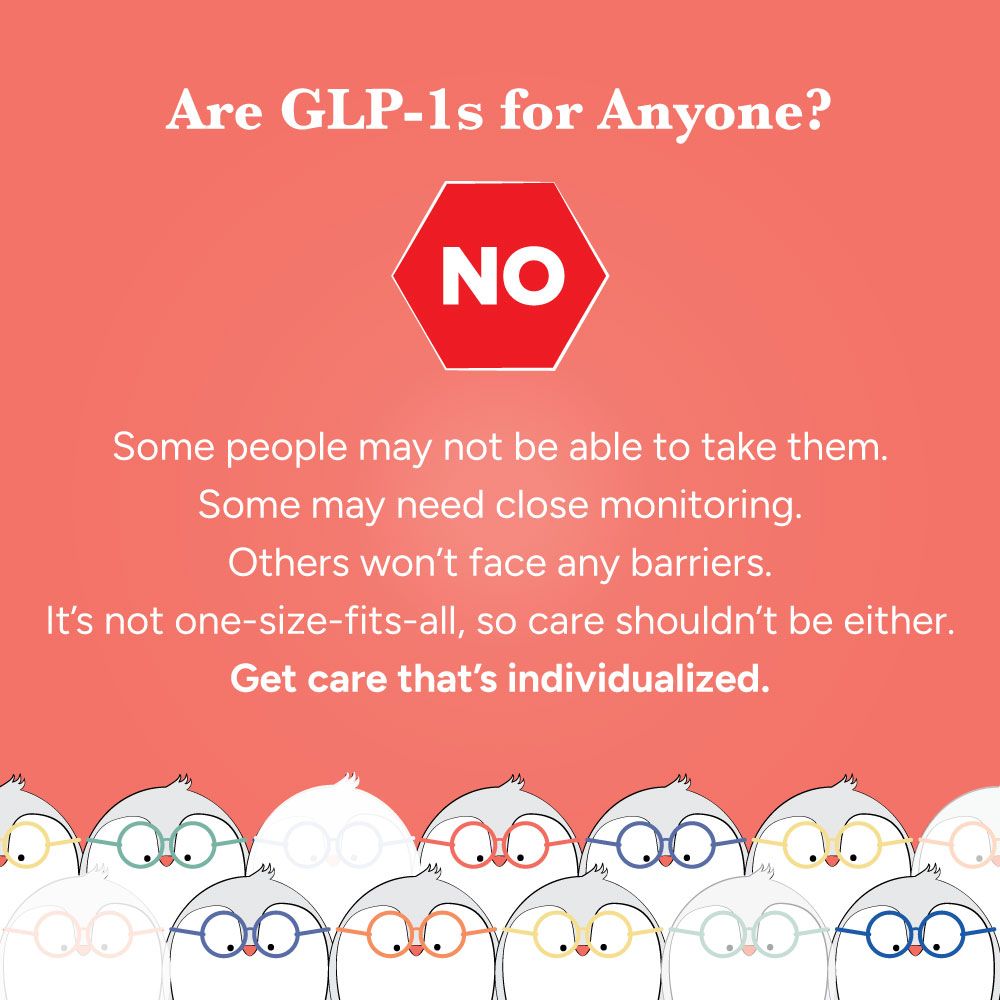
GLP-1 medications are not for everyone. Maybe not “breaking news” but worth pointing out given the current GLP-1 infodemic.
Some people should not take them. Full stop. Others may be able to, but only with close monitoring. This isn’t a one-size-fits-all situation.
For example, if you have a personal or family history of medullary thyroid cancer or multiple endocrine neoplasia type 2 (MEN2), a clinician would typically not prescribe a GLP-1 medication. Severe gastroparesis or other conditions that significantly slow stomach emptying? Also likely a no.
But that’s not it.
A history of pancreatitis, gallbladder disease, certain gastrointestinal conditions, reduced kidney function, eating disorder history, pregnancy, breastfeeding or some prescription meds - these all require real consideration and caution.
It’s not about gatekeeping. It’s about protection.
Before writing a prescription, a clinician should review your full medical history and current medications. That review isn’t red tape. It’s how healthcare is supposed to work.
You deserve care that’s individualized and safe.
It’s your body. Your health. Your future.