
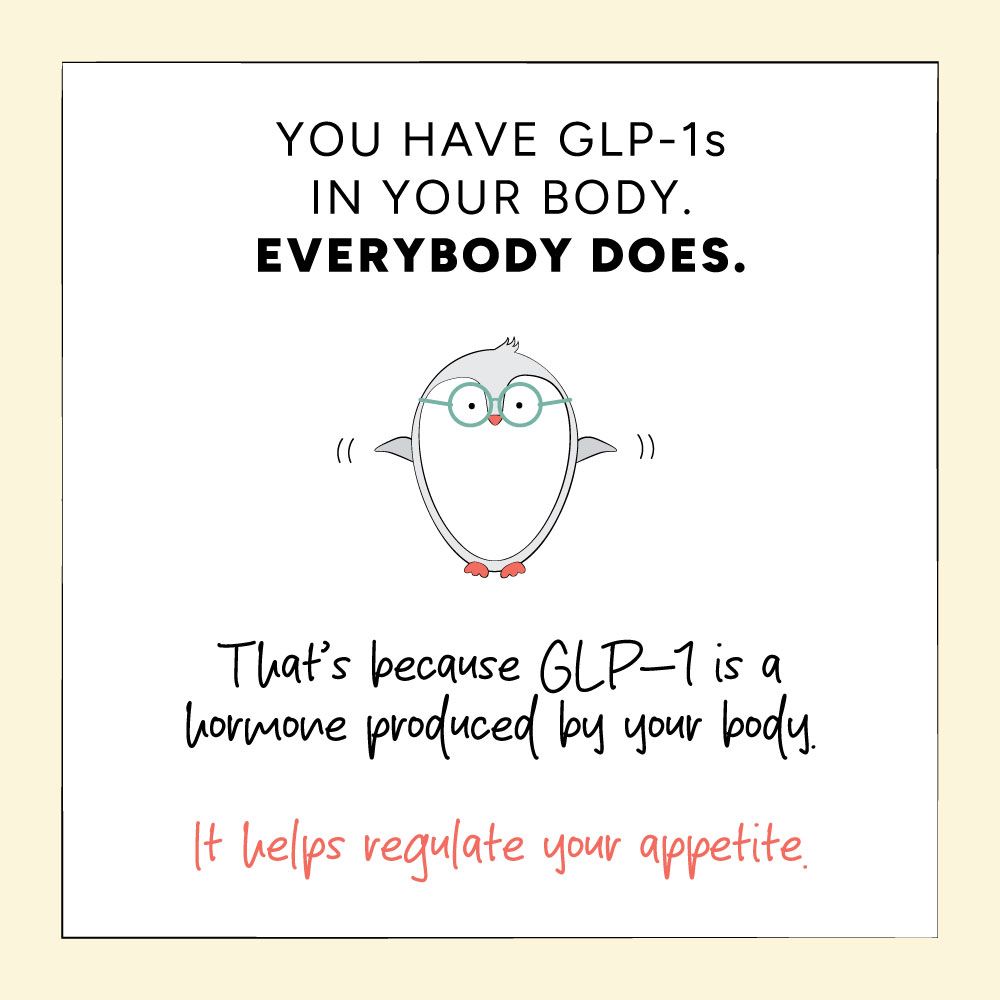
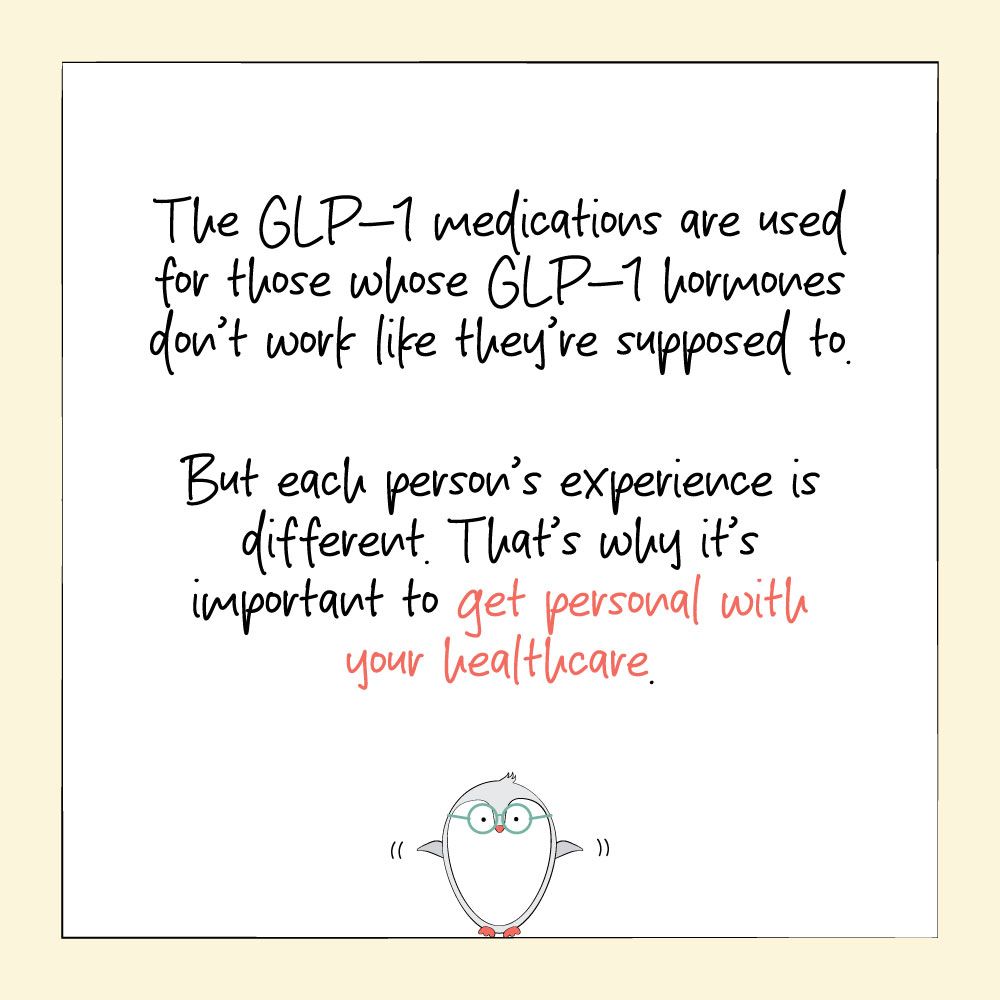
Did you know your body produces a hormone called GLP-1? Every body does. And it helps signal when you’re full.
So, why are you seeing GLP-1s everywhere? It’s actually probably about GLP-1 receptor agonists, medications that mimic the hormone.
Here’s the thing. Even though we all have GLP-1, it doesn’t work the same way for everyone. For some, the signals are weaker, fade faster or don’t really register. It’s not a willpower issue or a character flaw. It’s biology.
So, GLP-1 medications can help make those signals steadier, more consistent. Meaning feeling full sooner, staying full longer, slower digestion, calmer appetite. They can even help manage blood sugar levels for people with diabetes.
But these medications don’t burn fat, melt calories or replace nourishment. You still eat. You still have to move. What they can do is regulate appetite and metabolism, which can make everyday choices feel more manageable.
GLP-1 medications can be powerful tools for people whose hormone signaling needs help, but responses vary. That’s why it’s important that you ask all the questions you can think of, and get as much information as you can.
It’s your body. It’s your health.